Everything you need to launch, grow, and sustain a successful magazine in today's competitive media landscape.
Starting a magazine in 2026 is more achievable than ever — but it demands more than a great editorial idea. From defining your niche and building a business model to selling advertising, managing subscribers, and streamlining production, every step requires deliberate planning and the right tools. This guide walks you through the entire process in sequence: audience research, legal formation, revenue strategy, print versus digital decisions, distribution realities, and the publishing software that keeps modern media businesses running efficiently from launch day onward.

A single compelling issue is easy. Twelve issues a year, year after year, is the real test of a viable magazine niche.
Many aspiring publishers fall in love with a topic only to exhaust it by issue three. Before you invest in design, printing, or advertising sales infrastructure, run your niche through a structured content stress-test. The goal is to confirm that your subject area generates enough recurring news, opinion, profiles, and data to fill a publication on a predictable schedule.
Sit down and outline a distinct editorial angle for each of the next 12 issues. If you struggle to name eight without repeating yourself, the niche is likely too narrow. Strong niches — trade verticals, regional lifestyle, specialist hobbies — naturally surface seasonal hooks, annual events, and recurring columns that fill a calendar without forcing it.
Search for blogs, podcasts, newsletters, and associations already covering your niche. A crowded information landscape is a positive signal: it confirms that an audience actively consumes content on this topic. Sparse coverage can mean untapped opportunity — or it can mean the audience simply does not exist at scale. Know which before you commit.
Every sustainable magazine runs on repeatable departments: news, product reviews, profiles, opinion, data, and Q&As. List five to seven standing categories your niche can fill every issue. If a category requires you to invent new angles from scratch each time rather than refresh a familiar format, it will drain your editorial team quickly.
Content depth and advertiser depth are linked. Research whether brands actively spend in your niche through trade directories or industry events. A niche with no natural advertiser ecosystem forces you to rely entirely on subscription revenue, which raises the bar for audience size considerably before the business becomes viable.
Publish a free digital pilot or a short-run newsletter before committing to a full print launch. Track open rates, shares, and unsolicited reader replies. Genuine audience engagement — not just passive downloads — is the clearest proof that your niche has the content gravity to sustain a long-running publication.
The administrative groundwork that protects your publication from day one
Most how-to guides jump straight to editorial strategy and skip the legal scaffolding that keeps a magazine viable long-term. Getting these steps right early prevents costly problems later — and some, like your ISSN, must be in place before your first issue goes to print.
Decide whether to operate as a sole proprietorship, LLC, or corporation. Most independent publishers choose an LLC because it separates personal assets from business liabilities. File your articles of organization with your state's secretary of state office, obtain a federal Employer Identification Number from the IRS, and open a dedicated business bank account. Mixing personal and business finances is one of the most common early mistakes and complicates tax filing significantly.
An International Standard Serial Number is the unique identifier that libraries, distributors, and newsstands use to catalog your publication. In the United States, ISSNs are assigned free of charge through the Library of Congress. Apply before your first issue goes to print. Print and digital editions each require a separate ISSN, so if you plan to publish both formats, request two from the start.
Copyright in original editorial content attaches automatically at creation, but registering with the U.S. Copyright Office strengthens your legal standing if infringement occurs. Separately, consider trademarking your magazine's name and logo through the USPTO to prevent competitors from using a confusingly similar brand in your market category.
Every contributor — writer, photographer, illustrator — should sign a written agreement before work begins. Specify whether the arrangement is work-for-hire, which transfers copyright to your publication, or a limited license, which lets the contributor retain ownership while granting you defined usage rights. Contracts should also address kill fees, revision rounds, exclusivity windows, and payment terms to avoid disputes after delivery.
How to present your new magazine with confidence — even before your first issue ships
Every magazine needs advertisers, and every advertiser wants proof. That creates a classic catch-22 for new publishers: you need revenue to launch, but you need launch data to attract revenue. A well-constructed media kit breaks that deadlock by replacing hard circulation numbers with credible proxy data and a compelling editorial story.
Start with a precise demographic and psychographic portrait of your intended reader. Use U.S. Census data, industry association reports, or trade research to size the audience segment you are targeting. Advertisers do not need your subscriber count — they need to know the type of person who will hold your magazine. A specific profile (age range, household income, profession, buying intent) is more persuasive than a vague circulation promise.
Set advertising rates based on your planned print run or digital distribution target, not on actual numbers. Label everything clearly as projected or planned. Include standard ad sizes, frequency discounts, and any digital or newsletter add-ons. Transparency about your launch status builds trust rather than undermining it — founding advertisers expect it.
Substitute circulation history with other proof points: pre-launch subscriber sign-ups, social media following, waitlist size, endorsements from industry figures, editorial advisory board credentials, or comparable titles in adjacent markets. Even a modest but highly targeted pre-launch list signals genuine audience intent to a niche advertiser.
Include a clear editorial mission, sample content themes, a publishing calendar, and the names of any known contributors. Advertisers buy context as much as eyeballs. A distinctive editorial voice that aligns with their customer's interests is a legitimate selling point at any circulation level.
Structure a founding advertiser package with rate protection, premium placement, or co-branding in launch marketing. This converts the risk of early advertising into a tangible benefit, giving prospects a reason to commit before your readership data matures.
Before you register a business name, hire a designer, or pitch a single advertiser, answer one honest question: are you building a passion project or a media business? The answer shapes every decision that follows, from how much money you are willing to lose in year one to whether you ever need a CRM at all.
A passion project is a publication you would produce even if it never turned a profit — a neighborhood zine, a niche hobbyist quarterly, a community newsletter. Your success metric is reader satisfaction and personal fulfillment. Your monetization mix, if any, is light: a few local ads, a Patreon, or a modest subscription fee. The operational complexity you should invite in is equally low.
A media business is a different animal. You are building a revenue-generating asset, which means thinking from day one about advertising inventory, rate cards, billing cycles, editorial calendars tied to sales deadlines, and the systems that keep all of it from collapsing under its own weight. Your success metric is margin. Your monetization mix is deliberate: display advertising, sponsored content, digital editions, events, and subscriptions working in concert.
The mistakes are asymmetric. A passion-project founder who accidentally builds media-business infrastructure burns money on tools and complexity they never needed. A media-business founder who treats their launch like a passion project under-invests in sales operations and billing, then wonders why revenue never materializes.
Get clear on which one you are building. Write it down. Then let that answer drive every subsequent choice about staffing, technology, pricing, and growth.

Once you know what kind of publication you are building, write one paragraph before you do anything else. Not a mission statement padded with aspirational language — a working document that answers three ruthlessly specific questions: Who is your reader, exactly? What problem does your magazine solve for them that nothing else solves as well? And what unique angle makes your coverage irreplaceable?
Every decision that follows — the editorial calendar, the cover price, the ad rate card, the distribution channel — flows from this paragraph. If your founding document says your reader is an independent craft brewery owner who needs practical taproom business advice, then a feature on homebrewing history is off-brief, a national retail distributor is probably wrong for you, and your ideal advertiser is a point-of-sale software company, not a global spirits brand. The paragraph acts as a filter that saves you from expensive detours.
A strong founding document names the reader with demographic and psychographic precision, not just an age range. It identifies the specific tension or gap in their life that your magazine addresses. And it states your angle — the editorial voice, the format, the perspective — that competitors cannot easily replicate. "We cover personal finance for first-generation college graduates navigating wealth-building without a family safety net, using plain language and real case studies instead of jargon-heavy advice" is a founding document. "We publish content about money for young professionals" is not.
Print this paragraph and pin it where your team can see it. Read it before every editorial meeting. When a potential advertiser asks why they should buy a page, read it to them. When a contributor pitches a story that feels slightly off, check it against this paragraph first. The discipline of returning to your founding document is what separates magazines that build loyal audiences from those that drift into irrelevance within three issues.

Key principle
Your founding paragraph isn't a tagline — it's a decision filter. Every editorial, business, and distribution choice should pass through it.
Match your funding approach to your risk tolerance — and validate demand before you commit to print costs.
Understanding which end of the cost spectrum applies to your project shapes every funding decision that follows. Bootstrapping works best when you keep your initial format lean. Launching digitally first — building audience, refining content, and proving advertiser interest before committing to print — dramatically lowers your upfront exposure and is a genuine risk-management strategy, not just a compromise.
Crowdfunding offers something more valuable than money alone: market validation. A Kickstarter-style campaign for a first print run lets you test whether readers will pay before you invoice a single printer. If the campaign funds, you have both capital and proof of demand. If it falls short, you have learned that before absorbing the cost of unsold inventory — a real danger, since newsstand vendors return credit for copies that do not sell, leaving the publisher to absorb the loss.
Print-on-demand services remove the minimum-order barrier entirely, handling printing, packing, and global dropshipping with no stock investment required. This path suits passion-project titles and limited-edition collector issues where volume is secondary to quality.
For publishers seeking outside capital, a formal business plan is non-negotiable. Whichever path you choose, map your cash flow carefully: print bills are typically due upfront, while advertisers commonly pay 30 to 90 days after publication. That timing gap is the subject of its own section below, and planning for it is not optional.
The most common mistake new magazine founders make is treating audience-building as something that happens after launch. By the time your first issue is printed or published, you should already have a list of people who have raised their hand and said they want it.
Start with a dedicated email capture page months before your launch date. Describe your editorial mission clearly, explain who the magazine is for, and give visitors a concrete reason to subscribe now — a founding subscriber discount, early digital access, or a free preview piece. Email is the only channel you fully own, and in magazine publishing it remains the most direct line to your reader. A list of even 500 genuinely interested people is worth more than 10,000 passive social followers at launch.
Next, produce a beta or preview issue — sometimes called a zero issue — and distribute it deliberately. Send it to potential advertisers to demonstrate editorial quality, share it with industry associations or professional groups whose members match your target reader, and offer it to journalists or bloggers who cover your niche. A beta issue does double duty: it validates your concept with real feedback before you commit to a full print run, and it gives you tangible proof of concept when approaching early advertisers or investors.
Contributor reach is one of the most underused audience-building tools available to new magazines. Every writer, photographer, illustrator, or subject-matter expert you feature has their own audience. When a contributor shares the issue with their network, you earn warm introductions to readers who already trust that contributor's judgment. Brief contributors on your launch timeline, give them shareable assets, and make it easy for them to point their audience toward your subscription page.
Finally, identify two or three niche communities — forums, newsletters, professional associations, or local groups — where your ideal reader already gathers. Engage authentically before you pitch anything. When your launch arrives, those communities become your first word-of-mouth engine, and the subscribers you earn from them tend to be the most loyal you will ever have.
Concrete milestones and decision criteria for making the leap from digital-first to a full print edition
Most successful magazines start digital and layer in print only after the audience is proven. That sequencing is not timidity — it is sound capital management. A digital issue can be designed in a week and published the next day, while print requires sending files to a printer, reviewing proofs, and coordinating distribution before a single copy reaches a reader. Compressing those two timelines simultaneously before you have revenue is one of the fastest ways to exhaust your launch budget.
Treat your digital run as a live test environment with four specific exit criteria for the print decision.
First, email list quality over social follower count. An engaged email list of several thousand readers who open, click, and reply is a stronger signal of monetization readiness than tens of thousands of passive social followers. Advertisers and subscribers both convert from email at meaningfully higher rates.
Second, advertiser demand at scale. When inbound advertiser inquiries outpace what your digital rate card can absorb, and when prospects specifically ask about print placements, the market is telling you something. Print commands a trust premium, and that perception translates directly into higher CPMs.
Third, subscription renewal rate. One issue does not prove a business. Two or three renewal cycles on a digital subscription demonstrate that readers value the content enough to pay repeatedly. That cohort data is what justifies the capital commitment print requires.
Fourth, cash flow stability. Per-unit print costs range from roughly $0.30 to over $4.00 depending on quantity, paper stock, and size — and those bills are due before your advertisers pay their invoices, which can run 30 to 90 days post-publication. You need a cash buffer that covers at least one full print run before revenue arrives.
When all four criteria are met, consider a print-on-demand first run — no minimum orders, no inventory risk — to validate physical demand before committing to a full print schedule.

Key Takeaway
Digital-first isn't a compromise — it's the capital-efficient path to a sustainable print launch, backed by data your advertisers and investors will trust.
One of the most common cash-flow mistakes new publishers make is treating all revenue streams as equally accessible from day one. They are not. Understanding which income sources are realistic early and which compound over time is the difference between a magazine that survives its first year and one that quietly folds after issue three.
In the first three months, your most accessible revenue is direct advertising and affiliate income. Advertisers can be approached before your first issue ships, and a well-constructed media kit — even one built on projected audience data rather than verified readership — gives you something concrete to sell. A smaller, highly engaged audience is often more valuable to advertisers than a massive passive one, so focus your early pitch on audience quality and specificity, not raw numbers. Affiliate arrangements with brands that align with your editorial niche can also generate income almost immediately, with no minimum audience threshold required.
One critical operational reality to plan for: advertisers typically pay 30 to 90 days after publication, while your print bills are due upfront. This gap can strangle a new magazine even when ad sales are going well. Build a cash reserve or negotiate payment terms before you commit to a print run.
By months six to twelve, subscriptions begin to contribute meaningfully — but only if you have been building your email list and audience from before launch. Subscription revenue is guaranteed income, unlike newsstand single-copy sales where distributors take bulk copies at a discount and return credit for unsold issues, leaving you exposed to unpredictable returns. Prioritize direct subscriptions over newsstand placement in your early stages.
The real compounding happens at the 18-month mark and beyond, when memberships and events become viable. Bundling digital access, webinars, or workshops with a membership raises perceived value and lifetime customer revenue without significant added cost. Plan your first 18 months in three phases: sell advertising and affiliates early, convert readers to direct subscriptions through months six to twelve, then layer in membership and events once your audience has demonstrated loyalty.
How to structure pricing, renewal automation, and churn prevention from your very first issue
Subscriptions are the most bankable revenue stream a magazine can build — but only if they are structured and managed correctly from the start. A subscriber who pays upfront for 12 issues has already committed cash before a single copy ships, which is fundamentally different from the uncertainty of newsstand sell-through or the 30-to-90-day payment lag of advertising.
Start by deciding on your subscription cadence and pricing tiers before launch. Monthly subscriptions lower the barrier to entry but require more active renewal management. Annual subscriptions generate larger upfront cash and reduce churn by removing the monthly decision to continue. Many publishers offer both, with a meaningful discount for annual commitment to nudge readers toward the more valuable tier.
Renewal automation is where most new publishers leave money on the table. Manually tracking renewal dates across a growing subscriber list is error-prone and time-consuming. Automated renewal reminders — sent at 60, 30, and 7 days before expiration — dramatically reduce involuntary churn from subscribers who simply forgot to renew. Equally important is a dunning process for failed payments: a card that declines on renewal day does not have to mean a lost subscriber if your system automatically retries the charge on an optimized schedule and sends a branded payment-update prompt.
For print magazines, fulfillment logistics add another layer. You need to track which subscribers receive which issues, manage address changes, and handle gift subscriptions and comp copies without creating billing errors. Keeping subscriber records, billing history, and fulfillment status in a single system — rather than across spreadsheets, a payment processor, and a separate mailing list — is what separates publishers who scale cleanly from those who spend hours each week reconciling data.
As your subscriber base grows, cohort analysis becomes a powerful planning tool. Tracking retention rates by acquisition channel, price point, and issue tells you which subscribers are most likely to renew and which are at risk — information that shapes both your editorial decisions and your marketing spend. Publishers who treat subscription data as a strategic asset, not just a billing record, consistently outperform those who manage it reactively.
Ad Sales Operations
The operational infrastructure that keeps advertising revenue flowing — and prevents deals from falling through the cracks
Selling your first few ads is an editorial exercise as much as a sales one: you are telling a story about your audience and your editorial environment. But as your publication grows and your advertiser roster expands, the operational side of ad sales becomes the constraint. Proposals, insertion orders, scheduling, invoicing, and collections all need to happen reliably across every issue — and the complexity compounds quickly when you are managing multiple advertisers, multiple ad sizes, and multiple issues simultaneously.
The ad sales cycle for a magazine has a distinct shape that generic sales tools do not accommodate well. It begins with a proposal tied to a specific issue and placement, moves to a signed insertion order that locks in the booking, then requires the advertiser to deliver creative by a materials deadline, followed by publication, tearsheet delivery, invoicing, and finally payment collection. Each stage has its own deadline, and a missed step at any point — a late creative, an invoice sent to the wrong contact, a payment that slips past net-30 — creates downstream problems that affect both your cash flow and your relationship with the advertiser.
Rate cards are another operational reality that generic CRMs handle poorly. Magazine advertising is priced by placement (cover, inside front, back cover, run-of-book), size (full page, half page, quarter page), and frequency (one-time versus multi-issue contracts). Managing those variables in a spreadsheet or a generic deal pipeline means constant manual calculation and a high risk of quoting the wrong rate. Purpose-built publishing software stores your rate card natively, so proposals are generated accurately and consistently regardless of which team member is handling the account.
Multi-issue contracts add another layer. An advertiser who commits to six issues across a year needs a single contract that auto-generates the individual insertion orders for each issue, tracks creative delivery for each, and invoices on the correct schedule. Tracking that manually across a growing advertiser base is where most small publishing operations start to break down — and where the right software pays for itself within a single issue cycle.
For new publishers, the discipline of tracking every proposal, every signed order, and every outstanding invoice from the very first issue builds the operational habits and data history that make your business easier to run and easier to sell to future investors or acquirers.

Understanding where the money goes — and where the risk sits — before you print a single copy
For new publishers, newsstand distribution sounds glamorous: your magazine sitting on a rack at a major bookshop or airport retailer. The operational reality is far less romantic, and understanding it early can save you from a cash-flow crisis.
To get onto a newsstand, you cannot approach retailers directly. You must work through a national or regional distributor who acts as the intermediary between your print run and the retail shelf. The distributor takes bulk copies at a discounted price — often a significant markdown from cover price — and then the retailer takes their own margin on top. By the time a copy sells, the revenue reaching you can be a fraction of what the cover price suggests.
The deeper problem is the return model. Newsstands operate on a consignment basis: retailers receive credit for every unsold copy. That means you absorb the cost of printing, shipping, and distributing copies that never sell and come back to you as returns. For an established title with predictable sell-through rates, this is manageable. For a new publisher with no track record, it is a genuine financial hazard — you could print 5,000 copies, sell 1,200, and still owe the full print bill.
Subscriptions, by contrast, are guaranteed revenue. A reader who pays upfront for 12 issues has already committed cash before a single copy ships. That certainty makes subscription income far more bankable, especially in your first 12 to 18 months when cash flow is tight and advertiser relationships are still forming.
For most new publishers, the smarter path is to build a strong direct subscription base first — through your website and email list — and treat newsstand placement as a later-stage growth lever once your sell-through rate is something a distributor will find attractive. Proving demand before chasing shelf space is not a compromise; it is sound business strategy.

One of the most dangerous and least-discussed traps in magazine publishing is the timing mismatch between your costs and your revenue. Print invoices, paper suppliers, and distribution fees demand payment before your issue ever reaches a reader — yet the advertisers who funded that issue typically operate on net-30, net-60, or even net-90 payment terms. That gap can quietly strangle a magazine that is otherwise performing well editorially and commercially.
When you close your first issue, you may have sold strong ad pages, but those commitments do not equal cash in hand. Meanwhile, your printer expects payment on delivery or shortly after. If your working capital cannot bridge that window, you face a choice between delaying print — damaging your credibility with readers and advertisers alike — or scrambling for short-term financing at unfavorable terms.
Several practical strategies help publishers manage this gap. Requiring deposits from advertisers at booking, typically 25 to 50 percent, converts future revenue into present cash and also signals genuine commitment from buyers. Offering early-payment discounts of two to three percent incentivizes faster settlement without requiring you to chase invoices. Negotiating extended payment terms with your printer — particularly once you have established a track record — can shift the pressure point by 15 to 30 days.
On the systems side, publishers who track outstanding invoices, booking status, and payment due dates inside a single platform gain a real-time picture of their cash position rather than discovering shortfalls at the last moment. The Magazine Manager's integrated billing and ad management tools give publishers exactly that visibility, connecting booked revenue to invoicing and collections so the gap between what you are owed and what you have received is never a surprise.
How to structure your issue cycle so that editorial quality and sales deadlines stay in sync as you grow
The most common production failure is not a creative one — it is a coordination one.
The editorial calendar is the operational spine of any magazine. Without a clear, enforced schedule that connects assignment deadlines, advertising close dates, design handoffs, and print or publish dates, even a well-funded launch will struggle to ship issues consistently. Inconsistency is one of the fastest ways to lose advertiser confidence and subscriber loyalty simultaneously.
Start by mapping your issue cycle backward from your publish or print date. A typical print magazine requires files at the printer two to three weeks before the on-sale date, which means design must be complete before that, which means all editorial copy and advertiser creative must be in hand before design begins. Each of those milestones has a hard deadline, and the advertising close date — the last day you will accept new bookings for an issue — must be set early enough to give advertisers time to deliver their materials.
For a new publication, the most common production failure is not a creative one — it is a coordination one. A writer who misses a deadline pushes a designer who then cannot finish before the printer's cutoff. An advertiser who delivers creative late holds up the layout. A last-minute editorial change requires a round of proofing that was not budgeted into the schedule. Building buffer time into every stage of your production calendar is not pessimism; it is the difference between shipping on time and shipping late.
As your team grows, the coordination challenge compounds. Writers, editors, designers, ad sales representatives, and production managers all need visibility into the same schedule without stepping on each other's work. Publishers who manage this in shared spreadsheets or email threads find that version control becomes a full-time job. Purpose-built production management tools — like those built into The Magazine Manager — connect editorial and design workflows directly to your sales and billing operations, so everyone on the team is working from the same issue timeline and the same set of deadlines.
One platform to handle CRM, billing, subscriptions, and ad management — so you can focus on the content that defines your magazine.
Starting a magazine means wearing a dozen hats at once. The Magazine Manager was built specifically to take the operational ones off your head. As the first web-based CRM made for publishers, it now serves more than 33,000 media properties worldwide — and it was designed from the ground up by someone who understood the problem firsthand. Founder Mark McCormick launched over a dozen magazines in South Florida before building the platform, so every feature reflects a real publishing pain point rather than a generic sales workflow.
Track every advertiser, subscriber, and prospect in a single system built for media businesses. No generic sales CRM retrofitted for publishing — every field, workflow, and report is designed around how magazine teams actually work.
Automate recurring invoices, manage subscriber accounts, and handle renewals without juggling spreadsheets or separate tools. The platform keeps your revenue cycle moving so nothing falls through the cracks — including the cash flow gap between ad bookings and advertiser payments.
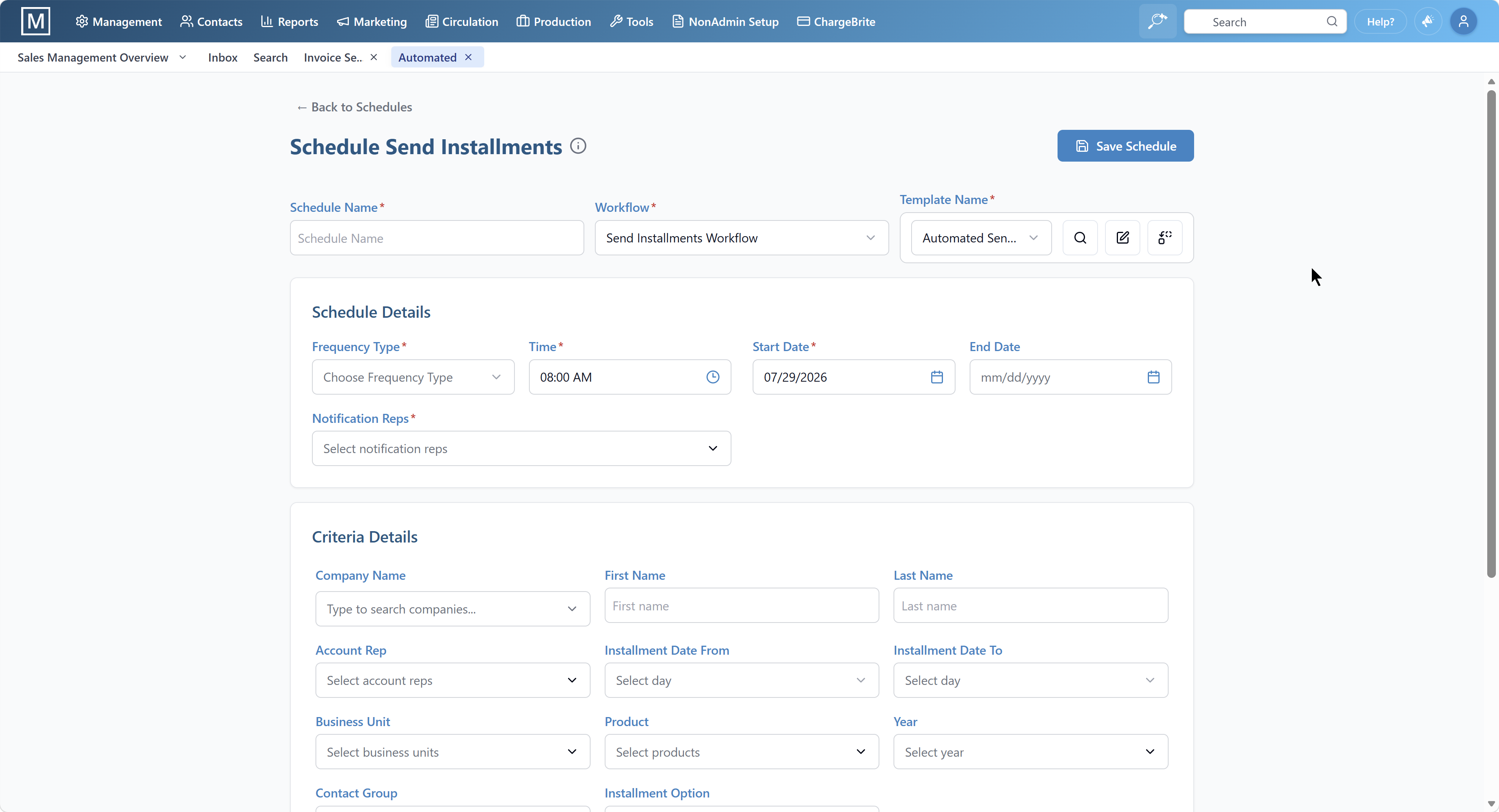
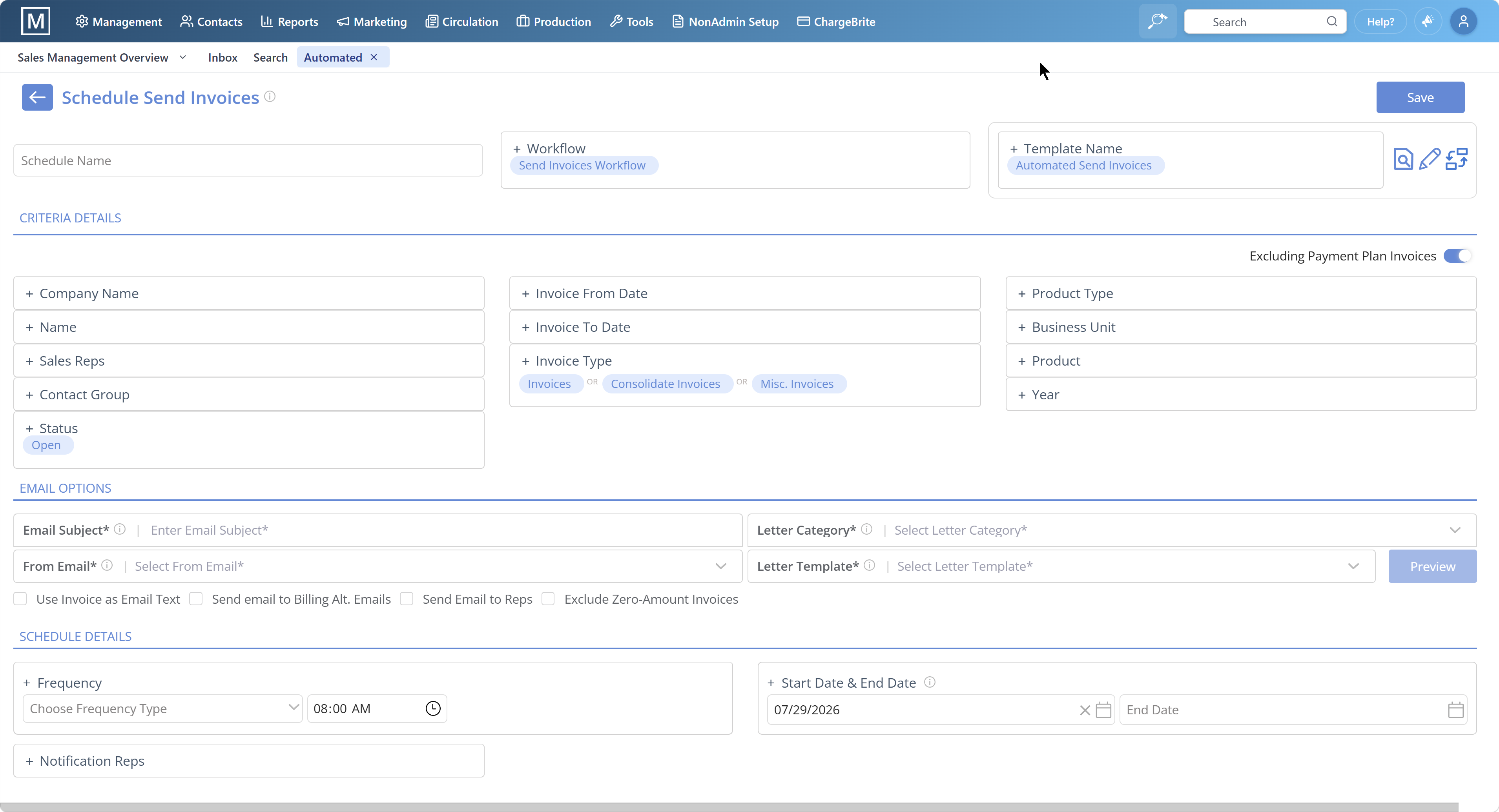
Manage the full advertising sales cycle from proposal to insertion order to tearsheet in one place. New publishers can track ad inventory, deadlines, and client communications without building a patchwork of disconnected tools.
When paired with Mirabel's Marketing Manager, the platform extends into marketing automation for publishers. Build targeted mailing lists, run campaigns, and track engagement — all without switching systems.
Coordinate editorial and design workflows alongside your sales and billing operations. Production management tools keep your issue schedule on track from first assignment through final layout, so sales deadlines and editorial deadlines stay in sync.
Abstract advice only goes so far. The decisions that define a magazine's first year — format, revenue mix, distribution, tooling — look very different depending on who is launching and why. The three scenarios below are composites drawn from common patterns among independent publishers. None of them is a guaranteed blueprint, but each illustrates how the principles covered in this guide play out against real constraints.
Scenario 01
A cycling coach with a loyal Instagram following decides to launch a quarterly magazine covering gravel riding culture. Rather than committing to print costs upfront, she publishes a digital-first flipbook edition and charges a modest annual subscription. Her first issue is designed in Adobe InDesign, exported to PDF, and distributed through a digital publishing platform. She builds her email list to several hundred subscribers before the launch date by offering a free 'route guide' download — giving her a warm audience on day one rather than launching cold. By issue three, subscription revenue is covering her design and hosting costs, and she begins approaching gravel-specific gear brands with a media kit built around her open-rate data and subscriber demographics rather than raw circulation numbers.
The Lesson
A small, highly engaged audience is often more valuable to advertisers than a large passive one, and digital-first keeps the financial risk manageable while you prove the concept.
Scenario 02
A former newspaper journalist launches a bi-monthly print magazine covering the arts and dining scene in a mid-sized city. He knows his audience will not pay much for a subscription, so he structures the business around local advertising from the start. Before designing a single page, he spends six weeks in conversations with restaurant owners, gallery directors, and boutique retailers — not to sell ads yet, but to understand what they actually want from a media partner. He uses those conversations to shape his editorial calendar, then returns with a media kit that maps specific editorial features to advertiser categories. His launch offer: a discounted rate for the first two issues in exchange for a 12-month commitment. Seven advertisers sign on before issue one goes to print, covering his first print run. He registers an LLC, obtains an ISSN, and opens a dedicated business bank account before accepting a single payment.
The Lesson
In a local print market, the editorial calendar and the advertising calendar must be built together from the beginning — and legal structure protects you the moment money changes hands.
Scenario 03
A design studio owner has been self-publishing a quarterly print zine for two years, selling copies through her studio's website and at design fairs. The zine has a cult following but no formal business structure and no advertising revenue. She decides to scale it into a proper magazine. The first step is not a redesign — it is formalizing the business: LLC registration, an ISSN, a dedicated business account, and a structured media kit with her existing sales data (units sold, geographic spread of buyers, social engagement). She then approaches design-adjacent brands — type foundries, paper suppliers, software companies — with sponsorship packages rather than traditional display ads, which suits her editorial aesthetic better. On the distribution side, she partners with a specialist magazine distributor rather than pursuing mass-market newsstands, keeping her print run tight and her sell-through rate high. She also launches a digital edition alongside the print version, opening a second revenue channel without a second production budget.
The Lesson
Transitioning from passion project to media business is primarily an operational and legal exercise, not a creative one — the editorial voice is already proven; what needs to catch up is the infrastructure.
Scenario 04
A consultant who has spent a decade in the commercial real estate industry decides to launch a trade magazine serving property developers and architects. Unlike consumer titles, his audience is small and professional — a few thousand decision-makers — but those readers are exactly who his potential advertisers want to reach. He spends his first three months not on content but on market validation: interviewing potential readers to confirm they would read and pay for the publication, and interviewing potential advertisers to confirm they would pay to reach those readers. He builds a detailed business plan covering 24-month financial projections, a break-even analysis, and a content strategy before approaching a small group of founding sponsors for pre-launch commitments. With three sponsors signed and a confirmed editorial advisory board of industry names, he launches a website and begins publishing weekly long-form articles — building SEO authority and an email list simultaneously before the first print issue ships. By launch day, his email list has grown to a size that gives him credible circulation data to show advertisers.
The Lesson
In B2B publishing, the audience's professional identity is the product — validate that advertisers will pay to reach them before you invest in production, and use content marketing to build a measurable audience before your first issue exists. Managing those advertiser relationships and ad orders at scale is where a purpose-built tool like The Magazine Manager becomes essential, replacing spreadsheets with a system built around the publishing sales cycle.
Choosing between print and digital is not a preference question — it is a financial and audience question. The answer should be driven by four variables: your niche, your budget, your audience's reading behavior, and your primary revenue model.
When digital-first is the right call
If your audience is under 45, professionally active, and already consuming niche content online, digital removes every barrier to entry. A digital-only magazine can be launched for a fraction of what print costs — tooling, hosting, and distribution combined run far less per month than a single print run. You can publish on a monthly cadence without the cash-flow pressure of printer invoices due before advertisers pay. And you can iterate: change your design, adjust your editorial mix, and test pricing without the sunk cost of unsold physical inventory.
Digital also gives you data that print cannot: open rates, time-on-page, click-through behavior, and subscriber cohort retention — all of which become your media kit when approaching advertisers.
When print is worth the investment
If your audience skews older, values tactile reading experiences, or operates in a category where print carries authority — trade publishing, luxury lifestyle, regional culture — the trust premium that print commands is real and measurable. Surveys consistently show a meaningful share of readers view print as more authoritative than digital. Major titles including Saveur, Swimming World, and Field & Stream returned to print in 2024 after going digital-only, signaling that print's perceived value has not collapsed.
Print also commands higher advertising CPMs. Advertisers in premium categories pay more for a full-page print placement than for a comparable digital unit, because the reader's attention is undivided — no hyperlinks, no notifications, no competing tabs.
The practical decision matrix
The most common mistake is choosing a format based on what the founder prefers to read rather than what the business model requires. Decide with a spreadsheet, not a gut feeling.
Churn is the percentage of subscribers who do not renew. A magazine that acquires 200 new subscribers per month but retains only 60% of its existing base has a 40% monthly churn rate. That means it is spending money to acquire subscribers faster than it is keeping them — growing costs while running in place on revenue. The business looks active but is not building.
Involuntary churn is the easiest to fix. This is subscribers lost because a credit card expired, a payment failed, or a renewal reminder never arrived. Automated dunning — retry logic that attempts a failed charge on an optimized schedule and sends a branded payment-update prompt — recovers a significant share of these subscribers before they ever realize their subscription lapsed. This is not optional infrastructure; it is table stakes for any subscription business.
Voluntary churn is harder. Subscribers who actively cancel are telling you something: the content did not deliver on the promise that acquired them, the publishing cadence was inconsistent, or the perceived value dropped below the price point. The most reliable predictor of voluntary churn is the gap between what your acquisition marketing promised and what your editorial actually delivered. A subscriber who signed up for practical business advice and received lifestyle content will not renew.
Retaining an existing subscriber costs a fraction of acquiring a new one. Every percentage point of improvement in your renewal rate compounds over time — a magazine that moves from 60% annual retention to 75% does not just reduce churn; it fundamentally changes the economics of growth. Publishers who treat retention as a billing function rather than an editorial and operational priority consistently underperform those who build retention infrastructure from their first issue.
Platforms like The Magazine Manager, with integrated subscription management and billing automation, give publishers the tools to track renewal rates by cohort, automate dunning, and connect subscriber behavior data to editorial planning — so retention becomes a managed metric rather than a monthly surprise.
Raising money to launch a magazine is one challenge. Knowing whether the underlying business model actually works is a different one — and it requires a break-even analysis and revenue projection that separates a funded idea from a viable plan.
For a digital-only magazine, your monthly operating costs are relatively contained: platform and hosting fees, email and subscription management tools, design software, and contributor payments. A lean digital operation can run for a few hundred to a couple of thousand dollars per month depending on your tooling choices and contributor budget.
For a print magazine, the cost structure is fundamentally different. Per-issue production and distribution costs — printing, paper, postage or distributor fees — can range from several thousand dollars for a small regional title to tens of thousands for a larger consumer publication, depending on print run, format, and distribution method. These costs are incurred before a single subscriber pays or a single advertiser settles their invoice.
Identify your fixed monthly costs (software, salaries or contractor fees, office if applicable) and your variable per-issue costs (printing, distribution, design). Then calculate the revenue required to cover both.
Subscription-led model: If your annual subscription price is $60 and your monthly operating cost is $3,000, you need 600 paying subscribers to break even on operating costs alone — before accounting for production. Add a $5,000 print run and you need to cover that too, either through advertising or a larger subscriber base.
Advertising-led model: Calculate your rate card revenue per issue at realistic sell-through. New publishers rarely sell out their ad inventory in the first few issues. A conservative assumption of 40–60% sell-through on your rate card is more realistic than 100%, and your break-even model should reflect that.
Most new magazines are still in audience-building mode. Subscription revenue is modest, advertising is below rate card, and costs are at or above revenue. This is normal — plan for it with a cash reserve.
If your subscriber acquisition and retention are working, subscription revenue should be growing predictably. Advertiser relationships established in months one through six should be renewing. This is when your revenue model either validates or reveals structural problems.
A magazine that has reached its second year with a stable subscriber base and a renewing advertiser roster has proven its model. This is the point at which expansion — adding a print edition, launching a digital product, or hiring your first full-time editorial staff member — becomes a data-backed decision rather than a leap of faith.
The first hire for most magazine businesses is additional editorial capacity, because content quality and publishing consistency are the primary drivers of subscriber retention. Plan that hire into your 12-month model, not as a surprise expense.
Realistic Cost Ranges
Anyone who quotes you a single figure for starting a magazine is oversimplifying. Launch costs span an enormous range, and where you land depends almost entirely on three decisions: print or digital, niche or mass-market, self-distributed or newsstand.
At the lower end, a digital-first niche publication with a small, targeted subscriber base can realistically launch for under $50,000. A structured sample business plan for a magazine publisher puts total funding required at $150,000, split between roughly $83,000 in start-up expenses and $67,000 in start-up assets. A broader planning framework cites a range of $150,000 to $375,000 for a more fully resourced launch, with the expectation of buying back outside investment by year three. At the top end, a full consumer title aimed at newsstand distribution can run into the millions.
Print adds a cost layer that catches many new publishers off guard. Per-unit printing costs range from as little as $0.30 to more than $4.00 per copy, depending on page count, paper stock, and print run size. A short print run reduces your unit cost exposure but raises your per-copy price, which directly affects your cover price and margin math.
Newsstand distribution introduces another financial variable that is rarely discussed plainly: distributors take bulk copies at a discounted price, and vendors receive credit for unsold copies. That means print bills are due upfront while revenue from sold copies arrives weeks later — a cash flow gap that has ended more than a few promising launches.
The most financially resilient approach is to start digital, prove your audience, and layer in print only once subscription and advertiser demand justifies the added cost and lead time. Print-on-demand services can bridge that gap, allowing limited print runs with no minimum order or inventory risk while you build toward a full print commitment.
Startup costs vary widely depending on your format and distribution model. A digital-only magazine can launch for under $50,000, covering design, a website, and basic marketing. A print magazine typically requires more: structured business plan frameworks cite a range of $150,000 to $375,000 for a fully resourced launch, while a full consumer newsstand title can run into the millions. Per-unit print costs alone range from $0.30 to over $4.00 depending on run size, paper stock, and specifications. Building a realistic budget early — including editorial, production, and sales overhead — is essential before committing to a launch date.
Yes. Most publishers operate as a formal business entity — commonly an LLC or sole proprietorship — to separate personal and business finances, sign contracts with advertisers, and accept payments. You will also need an ISSN (International Standard Serial Number), a free identifier assigned by your national ISSN center and required by distributors, libraries, and many advertisers. In the United States, ISSNs are issued through the Library of Congress. Print and digital editions each require a separate ISSN. Check with a local attorney or accountant for the specific legal and tax requirements in your region.
Digital-first is the lower-risk entry point. It eliminates print and postage costs, allows faster iteration, and makes analytics straightforward. Many publishers launch digitally, build a proven audience, and add print once advertiser demand and subscription renewal rates justify the capital commitment. A hybrid model — print plus a digital edition — can maximize both ad revenue and reader reach, but it also doubles your production workload and introduces the cash flow timing gap between print bills and advertiser payments. Purpose-built publishing software becomes particularly valuable at that stage.
The three primary revenue streams are advertising, subscriptions, and sponsored content. Advertising typically requires a media kit, a rate card, and a reliable system for tracking proposals, contracts, and invoices. Subscriptions provide predictable recurring revenue and are far more bankable than newsstand single-copy sales, where unsold copies are returned at your expense. Many independent magazines also layer in events, merchandise, or membership tiers at the 18-month mark and beyond. Managing these streams manually becomes unsustainable quickly, which is why publishers use a magazine CRM like The Magazine Manager to centralize ad sales, billing, and production in one platform.
A realistic timeline for a first issue is three to six months. This accounts for defining your niche and audience, writing your founding document, completing legal formation, building an editorial calendar, recruiting writers or contributors, designing a layout template, selling your first round of advertising, and arranging printing or digital distribution. Rushing the launch before ad inventory is sold or editorial quality is established is one of the most common reasons new magazines fail in their first year. Use the pre-launch period to build your email list and beta audience so that day one has momentum behind it.
At minimum, you need tools to manage advertiser relationships, track proposals and insertion orders, invoice clients, handle subscriber billing and renewals, and coordinate production deadlines. Many new publishers start with a patchwork of spreadsheets, email, and generic tools — and quickly find that the coordination overhead becomes a second job. Purpose-built publishing software like The Magazine Manager consolidates CRM, ad management, billing, subscription management, and production workflows into a single platform designed specifically for how magazine businesses operate, eliminating the manual reconciliation that consumes time better spent on editorial and sales.