
The Interactive Advertising Bureau recently updated its AI Transparency and Disclosure Framework, providing guidance for advertisers and marketers who are witnessing industry transformations firsthand along with “rapid AI integration [that] creates both opportunity and risk; opportunity to reduce costs and expand creative output, and risk of consumer mistrust, operational inconsistency, and regulatory exposure.”
“Inconsistent disclosure practices in GenAI advertising creative are fragmenting trust,” says the updated report’s executive summary. “Some campaigns label even minor AI involvement, while others disclose nothing unless legally mandated, creating confusion and ‘label fatigue’ where audiences ignore disclosures entirely. Consumer expectations compound the challenge.”
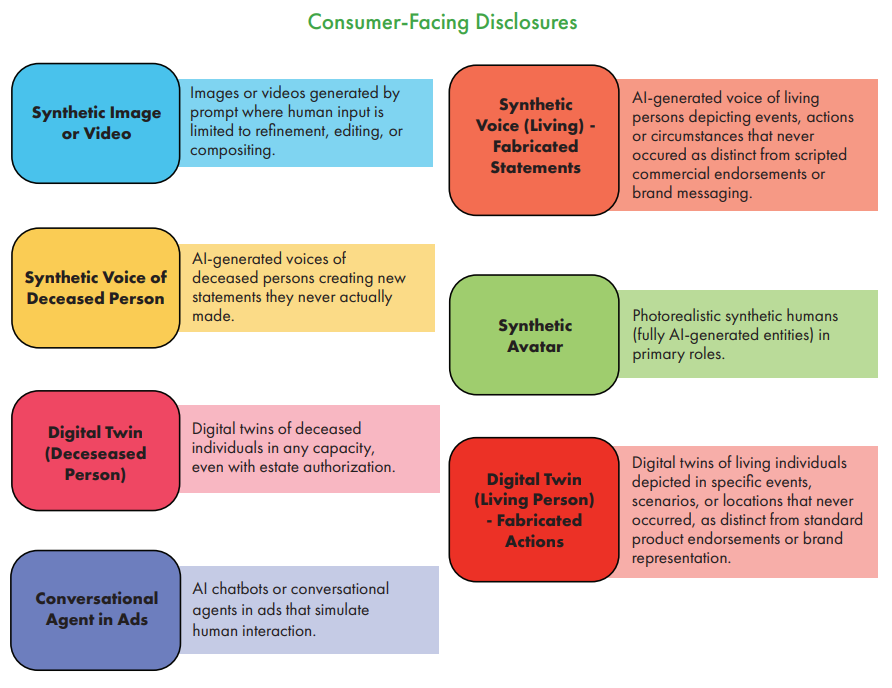
IAB’s best-practice framework centers around what it calls a “risk-based, two later disclosure model,” calling for disclosure only when a reasonable consumer might be misled about “authenticity, identity, or representation” by that AI-shaped content.
Considering the real-world ramifications that disclosure often means — with IAB finding one NYU study in which click-through rates dropped by 31.5% when consumers were told an ad was created with genAI — advertisers need to balance “transparency with operational feasibility.”
“That cost is warranted where AI use could mislead consumers,” the report says. “However, labelling applied to AI involvement that poses no risk of deception penalizes advertisers without protecting consumers. This is why disclosure should be reserved for cases of material risk, not applied across the board.”